
Data Security Commitment and Member Rights at Fun88
Fun88 protects member data with SSL encryption, multi-layer firewalls, and transparent data retention policies based on account status.
Many users have wondered: after entering their name, phone number, and email to create an account, where does that data go and what mechanisms protect it? This question is valid — especially when the platform involves real financial transactions. This article analyzes the specific security infrastructure, data retention policies, and member rights that Fun88 implements, based on published technical specifications and regulations.
Technical infrastructure protecting data at Fun88
Licensed by PAGCOR Philippines and operating since 2009, Fun88 has built a security system based on two main control layers: transmission encryption and infrastructure access control.
For encryption, all data flows exchanged between user devices and servers pass through 128-bit SSL protocol — a standard widely used in banking systems and financial institutions. Every action from login, deposits, to withdrawals falls within this protection scope.
For access control, the system deploys multi-layer firewalls to block unauthorized access requests from outside. This means even if a third party attempts to scan the server, these control layers will block the signal before it reaches actual data. The website also uses cookies to remember access history and language preferences for each session, helping increase page load speed without requiring re-authentication each time.
Information required during registration and account verification
When Creating a fun88 account, the system requires three basic types of information: full name, email address, and phone number. This is the minimum data needed to verify identity and ensure member rights during transactions.
Beyond registration information, the system also stores recordings of support calls. The purpose is to review consultation content if disputes arise and improve service quality. Members should note that every account action — from password changes to withdrawal requests — is recorded in real-time through the Login authentication system, serving as reference if needed.
Data retention policy based on account status
Fun88 clearly distinguishes two storage cases depending on account status:
Active accounts
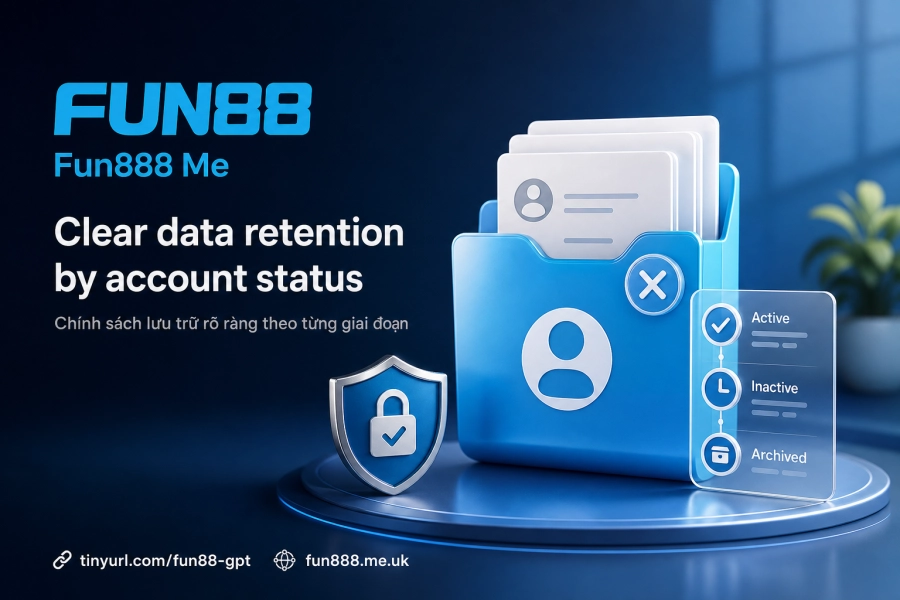
Data is stored indefinitely. All transaction history, member information, and support records are maintained continuously to ensure member rights and serve as reference at any time.
Closed accounts
After an account is closed, data is retained for a maximum of 12 months before permanent deletion. This retention period serves internal audit purposes and handles any requests that arise after account closure.
Policy updates will take effect within 05 days from announcement. Members should regularly check the security section on the platform to stay informed of the latest changes through 2026.
When is data shared with third parties?
Fun88 does not share member information for commercial purposes. However, there are three situations where data may be transferred to outside parties:
- Fraud prevention: when unusual account activity is detected, information may be shared with specialized units for investigation and prevention.
- Legal requests: competent authorities may request data provision in accordance with current regulations.
- Analytics partners: Fun88 uses Google Analytics to track navigation behavior on the platform — this data is in aggregated form, not directly linked to personal identity.
Member rights regarding personal data
Members have the right to access and request corrections to personal information at no cost. The process is carried out through the direct support system — contact customer care, provide account verification information, and submit specific requests.
For users interested in Detailed privacy policy — including how data is collected and scope of use — the dedicated privacy page presents each item clearly. Similarly, Terms and conditions outline the obligations of both parties regarding account management and dispute resolution.
Understanding these rights helps members actively control their data rather than relying entirely on the platform — this is a recommended practice with any online service involving financial connections.